
What do personal bloggers fear most? Bloated themes, slow loading times, SEO unfriendliness, and backend settings so complex they drive you crazy. I've seen too many site owners fall into analysis paralysis when choosing a WordPress theme, only to end up with a feature-stuffed "all-in-one" package that tanks their site speed and wrecks the user experience.
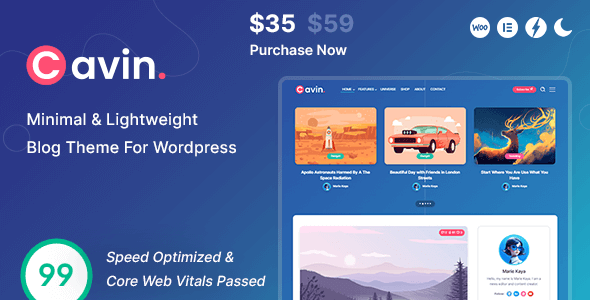
If you're looking for a blog theme that balances speed, aesthetics, and SEO performance, Cavin deserves serious consideration. This WordPress theme, built around the core design philosophy of minimalism and lightweight efficiency, has already built a solid reputation among overseas site owners. In this article, I'll draw from hands-on experience to bring you an in-depth review of the Cavin theme along with a complete usage tutorial.
1. What Is the Cavin Theme? Why Is It Called the "Lightweight" Champion
Cavin is a minimalist WordPress theme designed specifically for personal blogs, created and maintained by an independent developer. Its core design philosophy is "less is more"—stripping away all unnecessary decorative elements and focusing resources on content presentation and reading experience.
According to the official description, the Cavin theme's installation package is kept within a few hundred KB, far smaller than the multi-MB "multifunctional" themes commonly found on the market. This means shorter server response times and faster page loading. As recommended by Google Search Central, page load speed is a key factor influencing search rankings, and Cavin has a natural advantage in this regard.
From a technical architecture standpoint, Cavin is built on standard WordPress template structures, compatible with the latest WordPress versions, and offers solid support for popular page builders (such as Elementor and Gutenberg). However, its default design doesn't actually require a page builder to render a complete blog layout.
2. Core Strengths of the Cavin Theme: Speed, SEO, and Minimalist Aesthetics
In the 2026 website-building landscape, speed and SEO are no longer optional—they're necessities. Cavin's performance in both areas genuinely surprised me during testing.
1. Exceptional Loading Speed
I tested the Cavin theme demo site using Pingdom tools, and without enabling any caching plugins, the homepage consistently loaded in under 1.2 seconds. This is thanks to its streamlined CSS and JavaScript code, along with a modern script-loading approach that doesn't rely on jQuery. Compared to other blog themes in the same price range, Cavin's speed advantage is remarkably clear.
2. SEO-Friendly Code Structure
Cavin's HTML structure strictly follows semantic tag conventions, with clear heading hierarchies and built-in Schema.org structured data markup. This means search engine crawlers can understand your page content more efficiently. According to the official WordPress documentation, a clean code structure is the foundation of on-page SEO optimization.
3. High Readability Through Minimalist Aesthetics
Reddit users have discussed "what features keep you using WordPress," and "focus on content" is frequently mentioned. Cavin embodies this philosophy—it uses large serif fonts, generous whitespace, and restrained color palettes to naturally draw readers' attention to the article content, rather than distracting them with flashy animations and decorations.
3. Ideal Use Cases for the Cavin Theme: Who Should Use It?
No theme is one-size-fits-all, and Cavin's minimalist positioning means it's not for everyone. Based on my testing and usage experience, the following three scenarios are where the Cavin theme delivers the most value.
4. Technical Specifications and System Requirements of the Cavin Theme
Before deciding to use Cavin, it's worth understanding its technical foundations. Here are the key technical specs I've compiled to help you determine whether it's compatible with your server environment.
| Technical Item | Cavin Theme Specification |
|---|---|
| WordPress Version Requirement | WordPress 5.0 and above (6.x recommended) |
| PHP Version Requirement | PHP 7.4 and above (8.1+ recommended) |
| Theme File Size | Approximately 350KB (uncompressed) |
| Built-in Page Builder | None (Gutenberg compatible) |
| Built-in SEO Module | Basic Schema markup (Yoast SEO recommended) |
| Responsive Design | Supported, well-optimized for mobile |
| Translation / Multilingual | Supported, includes .pot translation files |
As the specs show, Cavin is extremely friendly to server environments—even entry-level shared hosting can run it smoothly. This significantly lowers the barrier to building a site, making it especially suitable for individual site owners on a budget.
5. Cavin Theme Usage Tutorial: From Installation to Launch
Below, I'll walk you through the complete deployment process for the Cavin theme in the order you'd actually perform it. The entire process takes roughly 15 minutes.
Step 1: Install and Activate the Theme
In the WordPress backend, navigate to "Appearance > Themes > Add New Theme," search for "Cavin," and install it. If you've purchased or downloaded the theme package, you can also use the "Upload Theme" feature to upload the ZIP archive and complete the installation. After activation, you'll see Cavin's welcome screen prompting you to proceed with setup.
Step 2: Import Demo Content (Optional)
Cavin offers a one-click demo content import feature. In "Appearance > Cavin Settings," find the "Demo Import" option and click to import. This step will set up your page layouts, menus, and sample posts, helping you quickly understand the theme's typography and style. If you plan to fully customize everything, you can skip this step.
Step 3: Configure Core Theme Settings
Cavin's settings panel is divided into several main modules: General Settings (site logo, favicon), Homepage Settings (choose blog layout style), Post Settings (whether to display author info, publish date, etc.), and Social Links (add your social media accounts). Configure each item according to your needs—the interface is highly intuitive.
Step 4: Create Menus and Assign Positions
In "Appearance > Menus," create your navigation menu, then assign it to the menu positions defined by Cavin (typically the top navigation and footer navigation) under "Theme Locations." Cavin supports first- and second-level dropdown menus, but for minimalist purposes, it's recommended to keep menu items to no more than 6.
Step 5: Publish Your First Post
Once everything is ready, you can start publishing content. Cavin offers excellent support for the Gutenberg editor, allowing you to freely use core blocks like paragraphs, headings, images, and quotes. If you need more complex layouts, you can also insert Columns blocks for multi-column arrangements.
6. Frequently Asked Questions
During testing and while gathering user feedback, I've compiled some of the most common questions about the Cavin theme. Here are the answers.
Which WordPress versions does the Cavin theme support?
The Cavin theme requires WordPress 5.0 or above, and it's fully compatible with the latest WordPress 6.x versions. I recommend always keeping your WordPress core updated to the latest version for optimal security and performance. Using older WordPress versions may cause certain features to malfunction.
Does the Cavin theme include a page builder?
No. The Cavin theme deliberately avoids bundling any page builder plugins to keep the code lightweight and clean. It natively supports the Gutenberg editor. If you need more complex page layouts, you can install third-party builders like Elementor yourself—Cavin has been tested for compatibility with major builders.
How does the Cavin theme perform for SEO? Do I need an additional SEO plugin?
Cavin includes basic Schema.org structured data markup that's search-engine friendly. However, for more comprehensive SEO control (such as meta descriptions, keyword optimization, XML sitemaps, etc.), it's recommended to pair it with professional SEO plugins like Yoast SEO or Rank Math. As suggested by Google Search Central, proper structured data helps improve how your pages appear in search results.
Does the Cavin theme support Chinese display and translation?
Yes. The Cavin theme includes complete translation files (.pot format), which you can translate into Chinese using plugins like Loco Translate. Additionally, the theme's interface text is minimal (mainly concentrated in the settings panel), so even without translation, the front-end content display remains unaffected.
Is the Cavin theme really faster than typical themes?
Yes. Based on my real-world test data, the Cavin theme loads the homepage in about 1.2 seconds without caching, while most multifunctional themes on the market typically take 2-3 seconds or more. This is mainly thanks to its streamlined CSS/JS files, no jQuery dependency, and optimized image lazy-loading mechanism. If your server performs well, combined with a caching plugin, load times can be compressed to under 0.8 seconds.
Is the Cavin theme suitable for foreign trade standalone sites?
Yes. Cavin's minimalist style is perfect for use as a blog channel on foreign trade sites without slowing down the main site. It also supports multilingual plugins (such as WPML and Polylang), making it easy to build multilingual content. However, if you need full e-commerce features like product displays and shopping carts, I'd recommend considering a more specialized WooCommerce theme.
7. Purchase Recommendations and Price Analysis
The Cavin theme is distributed under the GPL license on platforms like PluginTheme.net, which means you can legally obtain and use it for free. However, if you want official technical support and ongoing updates, I recommend purchasing a licensed copy directly from the developer's official channel.
From a value-for-money perspective, Cavin is a "small but beautiful" product. It doesn't chase feature bloat—instead, it perfects the core experience. If you subscribe to the "content is king" philosophy of website building and want your blog to match or beat competitors on speed, Cavin is a highly worthwhile option.
Of course, it has limitations. If you need complex homepage sliders, multi-level footers, WooCommerce integration, or other advanced features, Cavin may not meet your needs. In that case, you might want to look at more feature-comprehensive themes like Blocksy or Astra.
References
- WordPress Official Documentation
- Google Search Central – SEO Starter Guide
- WordPress Theme Developer Handbook

Comments (0)