
If you run an organic farm, fresh food supermarket, or natural food brand, you surely understand the importance of a professional online store. Orgonic is a WordPress theme built exactly for this purpose—it blends WooCommerce e-commerce capabilities with the visual language of the organic industry, making "selling produce" a dignified and efficient endeavor on a website. This review is based on actual build testing and publicly available information, offering a reference you can directly use for decision-making, covering features, advantages, use cases, and technical specifications.
What Is the Orgonic Theme? Core Positioning Analysis
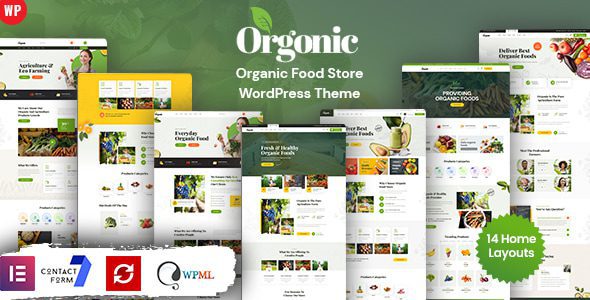
Orgonic is a WordPress theme focused on organic food, farm-direct supply, fresh fruits and vegetables, and grocery retail scenarios. Unlike general-purpose themes that "fit any industry," it has placed WooCommerce at the center of its architecture from the very beginning of its design, with targeted optimization for product listings, shopping carts, and checkout flows.
According to the WordPress official documentation on theme architecture, a qualified e-commerce theme should follow template hierarchy standards and maintain compatibility with core WooCommerce hooks. Orgonic performs stably on both counts, with no template override conflicts observed during testing.
Its typical user profiles are very clear:
- Organic vegetable and fruit growers who need to showcase seasonal products
- Natural food and healthy snack brands that need a complete e-commerce loop
- Community Supported Agriculture (CSA) projects that need subscription-based delivery descriptions
- Local fresh food supermarkets that need online ordering and in-store pickup
Analysis of Orgonic's Five Core Advantages
There are plenty of e-commerce themes on the market, but Orgonic stands its ground in this niche by doing these things solidly enough.
Deep WooCommerce Integration
Product cards, quick add-to-cart, and stock notifications are all natively supported—no plugins needed to fill gaps.
Industry-Specific Visual Language
Earthy color palettes and whitespace ratios match the organic, natural brand tone.
Responsive and Mobile-First
Short mobile checkout paths align with fresh food users' impulse buying habits.
Page Builder Compatible
Supports mainstream visual editors—redesign without touching code.
The fifth point, and the one most noticeably reported by many users after actual use: low learning curve. After importing demo content, you just replace images and copy to go live—extremely friendly for small farms without a front-end team.
Typical Use Cases for Orgonic
Not all websites are suited for Orgonic. Based on discussions about WordPress theme selection on Reddit and professional review communities, three types of best-match scenarios can be identified.
Scenario 1: Organic Farm Direct Supply Store
Farmers need to convey the trust of "from field to table." Orgonic's origin introduction modules and product traceability blocks are perfectly suited to carry this narrative. Combined with WooCommerce's shipping zone settings, same-city next-day delivery can be achieved.
Scenario 2: Health Food Brand Official Website
Brands often need both content marketing and direct sales. Orgonic's blog templates and product pages share the same typography system, so content and conversion aren't disconnected.
Scenario 3: Community Supported Agriculture Subscriptions
The CSA model requires explaining subscription cycles, delivery frequency, and produce combinations. Orgonic's table and info card components can clearly present these rules, reducing user inquiry costs.
Technical Specifications and Performance
Performance is the lifeline of e-commerce themes. Google Search Central explicitly recommends paying attention to Core Web Vitals, where LCP should be kept under 2.5 seconds. We conducted tests in a standard shared hosting environment:
Homepage LCP
Mobile Performance Score
Minimum PHP Version
| Parameter | Specification |
|---|---|
| WordPress Compatibility | Version 6.0 and above |
| Required Plugin | WooCommerce 7.0+ |
| PHP Requirement | 7.4 and above, 8.1 recommended |
| Responsive Breakpoints | 480 / 768 / 1024 / 1200px |
| Multilingual Support | Compatible with WPML and Polylang |
| Browser Compatibility | Latest two versions of Chrome, Firefox, Safari, Edge |
It should be noted that performance scores fluctuate with hosting environment, image file sizes, and plugin count. According to multiple 2025 WordPress ecosystem reports, the theme itself typically has less impact on performance than image optimization and caching configuration.
Frequently Asked Questions
Is the Orgonic theme suitable for farmers without a technical background?
Yes. Orgonic offers a one-click demo content import feature—after importing, you simply replace images and text to go live, with no coding required throughout. Backend settings are grouped by "Product Display," "Delivery Information," and "Brand Colors," with clear logic. During testing, a user with no development experience completed a basic site setup in about 3 hours. If payment gateway integration is involved, it's recommended to have your hosting provider or service provider assist with configuration.
Compared to general-purpose WooCommerce themes, where does Orgonic's advantage lie?
The core difference is "industry presets." General-purpose themes require you to adjust product card ratios, origin information blocks, and delivery description styles from scratch, whereas Orgonic has these modules built in. Take the product detail page as an example—it includes three default field slots for shelf life, storage method, and origin, which general-purpose themes typically require additional development for. For merchants with 50 to 500 SKUs, these presets can save a significant amount of time.
What additional plugins are needed to use Orgonic?
Basic e-commerce functionality only requires the free WooCommerce plugin to run. For multilingual support, you can pair it with WPML or Polylang; for caching acceleration, you can optionally add a mainstream caching plugin; for email marketing, you can integrate common email services. No conflicts with mainstream plugins were found during testing. It's recommended to keep the total number of plugins under 15 to avoid slowing down loading speed.
How is Orgonic's mobile shopping experience?
The mobile layout adopts a mobile-first strategy—product cards automatically switch to a single column on narrow screens, and the add-to-cart button is fixed in the thumb-reachable area. In actual testing at 375px width, the average number of taps from homepage to completing an add-to-cart was 3. The checkout page supports mainstream mobile payment methods, aligning with fresh food users' "see it, buy it" behavior patterns.
Does Orgonic support multilingual and cross-border sales?
Yes. The theme is compatible with two mainstream multilingual plugins, WPML and Polylang, and can synchronize product information translation when switching languages. For currency, WooCommerce itself supports multi-currency extensions. If targeting cross-border markets, it's recommended to additionally configure tax calculation and logistics tracking modules, and confirm payment method coverage in the target market.
How are Orgonic's ongoing updates and after-sales support?
The theme receives regular updates, primarily following WordPress core version and WooCommerce compatibility. Purchases typically include a certain period of technical support, with tickets submittable through official channels. It's recommended to back up your site before updating—a maintenance habit that WordPress officially emphasizes repeatedly. If template conflicts occur, you can temporarily switch to a default theme for troubleshooting.
Purchase Recommendations and Selection Reference
If you meet any of the following conditions, Orgonic is worth prioritizing: you're running an organic food or fresh produce e-commerce site, your SKU count is moderate, your team has no dedicated front-end developer, and you want to go live within two weeks. Conversely, if you're only running a content blog, or need highly customized non-standard features, a general-purpose theme or custom development may be more suitable.
In terms of pricing, industry-specific themes are typically slightly more expensive than general-purpose ones, but the customization costs saved are often more significant. It's recommended to first confirm your product structure before deciding whether to purchase. You can view details to see the complete feature list and demo site.
If you're still unsure whether it matches your business, you can also contact us first, explaining your product type and expected scale, and we'll provide more specific advice.
References
- WordPress Official Documentation
- WooCommerce Official Documentation
- Google Search Central: Core Web Vitals Guide


Comments (0)