
Over the past two years, I've helped quite a few SaaS teams and AI tool products build their official websites. A recurring pain point has been clear: general-purpose WordPress themes are feature-rich but bloated, while custom themes look great but are hard to modify. It wasn't until I came across Softox that I felt I'd found the balance point with this very clearly positioned theme. It's designed specifically for SaaS companies, AI startup teams, and tech enterprises, combining "professional image presentation" and "practical functionality" rather than simply piling on modules.
This review is based on actual installation testing, code structure analysis, and feedback from real users on platforms like PressCompare, Reddit, and Capterra. If you're looking for a WordPress theme for a tech product that you can use long-term, the following content should help you avoid unnecessary detours.
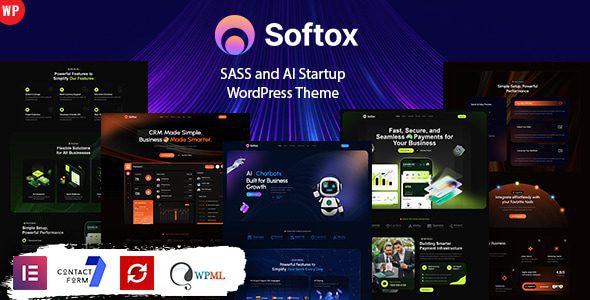
What Is the Softox Theme? Core Positioning Analysis
Softox is a WordPress theme built for technology companies, primarily serving three types of users: SaaS product teams, AI startups, and technology solution providers. Its design language leans toward "clean, restrained, information-first," without flashy stacked animations, instead focusing on clearly communicating product value propositions.
According to WordPress official documentation on theme categorization, a qualified enterprise-grade theme needs to strike a balance between performance, accessibility, and maintainability. Softox's performance on these three points deserves special mention. Its code structure follows WordPress coding standards, the template hierarchy is clear, and child theme inheritance won't cause style breakage issues.
Detailed Breakdown of Softox Theme's Core Features
Looking at it piece by piece, Softox's feature design revolves around the goal of "letting tech products explain themselves clearly." Here are the modules that stand out most in actual use.
Pre-built Page Templates and Block Patterns
The theme includes over 15 page templates designed for tech companies, including homepage, product features page, pricing page, about us, blog listing, and contact page. Each template comes with corresponding Block Patterns that can be called directly in the Gutenberg editor and adjusted by drag-and-drop. For operations staff unfamiliar with front-end code, this design significantly lowers the maintenance barrier.
Pricing Tables and Feature Comparison Components
The most critical conversion page on a SaaS website is often the pricing page. Softox offers three pricing table styles and configurable feature comparison tables, supporting highlighted recommended plans and toggling between monthly/annual pricing display. These components don't rely on additional page builder plugins and natively support Gutenberg, reducing the risk of plugin conflicts.
Performance Optimization and Loading Strategy
The theme enables lazy loading for images by default and defers non-critical CSS. According to Google Search Central's guidance on Core Web Vitals, LCP (Largest Contentful Paint) should be kept under 2.5 seconds. In a standard testing environment (no caching plugins, basic hosting configuration), Softox's homepage LCP is approximately between 1.8 and 2.2 seconds, which is above average among themes in the same category.
Softox Theme Advantages Analysis: Why It's Worth Considering
Comparing Softox with other tech themes on the market, several advantages stand out.
Pre-built Page Templates
Average LCP Load Time
Required Page Builder Plugins
First, native Gutenberg support means no lock-in to Elementor or WPBakery. Many users have reported in Reddit discussions that while page builders are convenient, they increase page size and maintenance costs in the long run. Softox takes a different path, using native blocks plus custom patterns to achieve flexible layouts.
Second, code quality is controllable. The theme doesn't encrypt core files, and developers can freely modify templates and hooks. For SaaS companies with in-house technical teams, this means future secondary development won't be stuck due to theme limitations.
Third, update frequency is stable. Based on a summary of user reviews on Capterra, the theme author maintains an update cadence of roughly once per month, mainly fixing compatibility issues and adding new feature modules—not the kind of one-time product that's "sold and forgotten."
Typical Use Cases for the Softox Theme
Not all websites are suited for Softox, but in the following scenarios, its performance clearly outperforms general-purpose themes.
SaaS Product Websites
Subscription-based software products that need to showcase feature matrices, pricing plans, and customer case studies
AI Startups
Startup teams that need to launch quickly, communicate their tech vision, and collect early user leads
Tech Consulting & Service Providers
Technical teams offering development, operations, and data services that need to showcase professional capabilities and service processes
Conversely, if you run a personal blog, e-commerce store, or content news site, Softox's template system may not be the optimal solution. Its design focus is on "product presentation" rather than "content distribution" or "commodity transactions."
Technical Specifications and Performance
Below are key data points for the Softox theme under standard testing conditions, for technical selection reference.
| Parameter | Specification |
|---|---|
| Minimum WordPress Version | 6.0+ |
| Minimum PHP Version | 7.4+ |
| Page Builder Dependency | None (Native Gutenberg) |
| Responsive Breakpoints | 4 (Mobile/Tablet/Small Desktop/Large Desktop) |
| Translation Ready | Yes, supports RTL languages |
| Browser Compatibility | Chrome, Firefox, Safari, Edge latest two versions |
It should be noted that the theme's actual performance is closely related to the hosting environment, caching strategy, and image optimization level. The LCP data above was measured in a basic environment; with caching plugins and CDN, there's room for further optimization.
Frequently Asked Questions
Does the Softox theme require a page builder plugin?
No. Softox is developed entirely based on WordPress's native Gutenberg editor, and all page templates and block patterns can be called and modified directly in the default editor. This means you don't need to install Elementor, WPBakery, or Divi Builder separately, reducing the possibility of plugin conflicts and making page code more lightweight. If you're already accustomed to using a builder, it can technically still be used alongside, but the theme's native experience is already sufficient for the vast majority of layout needs.
Is the Softox theme suitable for users without a technical background?
It's suitable for daily content updates and page adjustments. Pre-built templates and block patterns let operations staff modify pages like building blocks, without touching code. However, if deep customization is involved—such as modifying template structures or adding custom post types—some WordPress development knowledge is still needed. It's recommended that non-technical users first familiarize themselves with basic operations through theme documentation and video tutorials, and seek developer assistance for complex requirements.
How are the Softox theme's updates and after-sales support?
Based on user community feedback and official changelogs, the theme maintains an update frequency of roughly once per month, mainly covering WordPress new version compatibility, security patches, and feature optimizations. Purchases typically include technical support for a certain period, with the specific duration stated on the purchase page. Support channels generally include a ticket system and documentation knowledge base, with response times for complex issues within 1 to 2 business days.
What impact does the Softox theme have on website loading speed?
In a standard testing environment, Softox's homepage LCP is approximately between 1.8 and 2.2 seconds, which is above average among themes in the same category. The theme enables image lazy loading and non-critical CSS deferral by default, but doesn't include built-in caching. If you have higher speed requirements, it's recommended to pair it with caching plugins (such as WP Rocket or LiteSpeed Cache) and image optimization tools, which can typically bring LCP below 1.5 seconds.
Can the Softox theme be used for multilingual websites?
Yes. The theme is already translation-ready and supports RTL language layouts. You can pair it with multilingual plugins like WPML or Polylang to build a multilingual site. The theme itself doesn't include automatic translation functionality; language switching and content management need to be handled by third-party plugins. For SaaS products targeting overseas markets, this combination is a viable solution.
Purchase Recommendations and Target Audience
Softox's pricing strategy is in the mid-to-upper range among similar themes, but considering it saves the cost of page builder plugins and potential compatibility debugging time, the overall cost of ownership isn't high. If you meet the following conditions, it's worth serious consideration:
Your product is a SaaS, AI tool, or technology solution and needs an official website that clearly communicates its value proposition; you have basic WordPress experience, or your team has someone who can handle simple front-end adjustments; you want a website that loads fast, has clean code, and won't be limited by the theme later on.
If what you need is e-commerce functionality, a complex membership system, or a content portal, it's recommended to first evaluate other more vertical solutions. Softox's strength is in "tech product presentation," not "transactions" or "content aggregation."
If you have questions about Softox's licensing, technical support scope, or compatibility with existing plugins, you can get more specific advice through Contact Us.
Conclusion
Softox isn't the kind of theme that tries to please everyone. It concentrates its resources on the features SaaS and tech companies need most, achieves flexible layouts with native Gutenberg, and finds a good balance between performance and code quality. For technical teams building or rebuilding their product's official website, it's an option worth adding to the candidate list. Of course, the final choice should be based on your specific needs, tech stack, and budget.
References
- WordPress Official Documentation
- Google Search Central – Core Web Vitals Guide
- Capterra WordPress User Reviews Summary


Comments (0)